
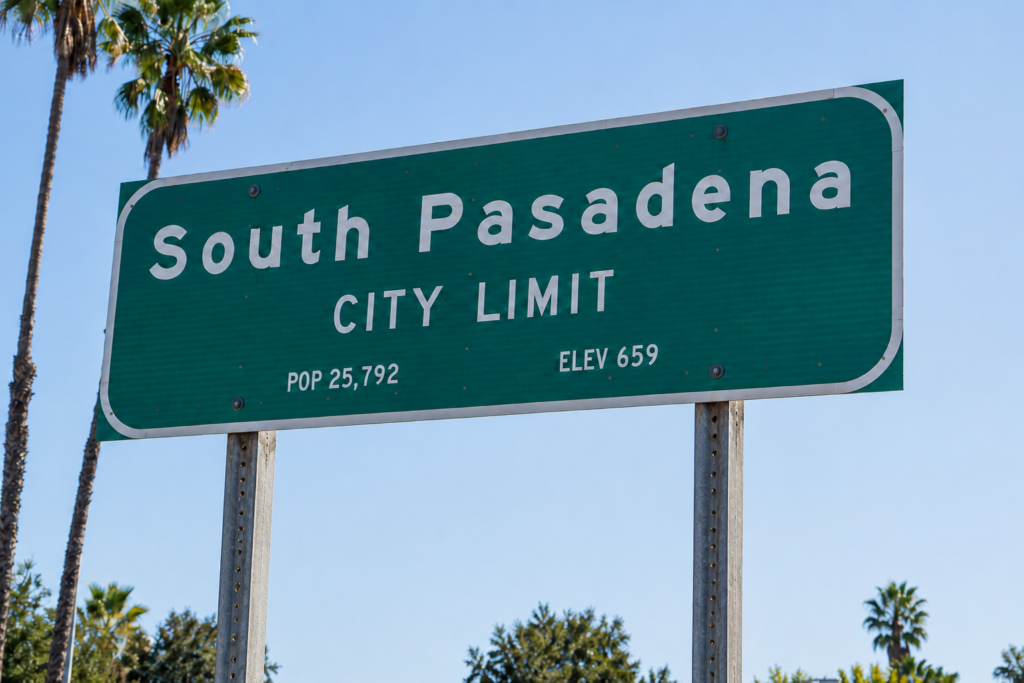
SOUTH PASADENA
South Pasadena Real Estate Agent | NELA Neighborhood Guide
Northeast Los Angeles — Comprehensive Neighborhood Guide
By Felipe Crook | Felipe Crook – eXp Realty | NELA Real Estate Agent | CA DRE #02047440
Broker: eXp of Greater Los Angeles, Inc.
Published: May 16, 2026 | Last updated: May 16, 2026
MLS Data: 365 days ending May 16, 2026 | Source: CRMLS Area 658 | SFR (Detached + Attached) | 114 closed transactions. Condo/Townhouse covered separately.
South Pasadena is an incorporated city of 3.4 square miles in the western San Gabriel Valley with its own school district, its own planning department, and the strongest seller’s market in the NELA cohort. Over the past year, 114 single-family homes sold here at a median price of $2,100,000 (CRMLS Area 658). What sets South Pasadena apart is velocity: 63% of homes sold above asking, the median list-to-sale ratio was 103.7%, and the median days on market was 24. If you own a home in South Pasadena and you are thinking about selling, you are in the strongest position of any NELA seller. This guide covers what you need to know.
South Pasadena Neighborhood Overview: Location, Boundaries, and Character
Location and Boundaries
South Pasadena is an incorporated city in the western San Gabriel Valley, immediately south of Pasadena and east of the City of Los Angeles. It is one of the smallest incorporated cities in Los Angeles County by area at 3.43 square miles. The city is bounded by Pasadena to the north and east, the City of Los Angeles (Highland Park/Hermon) to the south and west, Alhambra to the southeast, and San Marino to the east. The Arroyo Seco forms much of the western boundary.
South Pasadena operates as an independent municipality with its own City Council, police department, planning and building department, and school district (South Pasadena Unified School District, SPUSD). This is an important distinction from the other 8 NELA neighborhoods in this guide series, which are all neighborhoods within the City of Los Angeles and share LAUSD, LADBS, and LA city zoning. In South Pasadena, zoning, permitting, ADU rules, and school assignments are administered by the City of South Pasadena, not the City of LA.
Character & Identity
South Pasadena functions as a small town within the metropolitan area. Mission Street is the walkable downtown core with independent restaurants, cafes, bookshops, and boutiques. The residential streets surrounding it are defined by mature tree canopy, historic housing stock, and a scale that is closer to a Midwest college town than a typical LA neighborhood.
The housing stock is predominantly pre-1960. The median year built across the 114 closed SFR transactions in this dataset is 1938. Craftsman (18 sales), Spanish Colonial (10 sales), Traditional (8 sales), and Mid Century Modern (7 sales) are the most common styles. The median home size was 2,119 square feet on a 7,780 square foot lot. 40% of closed transactions had views and 21% had private pools.
The city has multiple designated historic preservation districts and a strong preservation culture. New construction is limited by both the small city footprint and the preservation sentiment. This constrained supply is a structural feature of the market, not a temporary condition.

Transit & Commute Access
Metro Rail: Two Metro L Line (formerly Gold Line) stations serve South Pasadena: Mission Street and Fillmore. Direct rail service to Pasadena, Union Station (approximately 20 to 25 minutes), Little Tokyo, and Azusa.
Freeway: I-110 (Arroyo Seco Parkway / Pasadena Freeway) provides direct access and connects to Downtown LA. I-210 (Foothill Freeway) is accessible via Pasadena for east/west San Gabriel Valley travel. SR-134 connects to I-5, I-210, and the westside via Glendale.
The Mission Street corridor rates above 80 on Walk Score (Very Walkable). Properties within walking distance of Mission Street and the Metro stations command a walkability premium that does not exist in the hillside portions of the city.

South Pasadena Architecture, Landmarks, and Things to Do
Architectural Styles
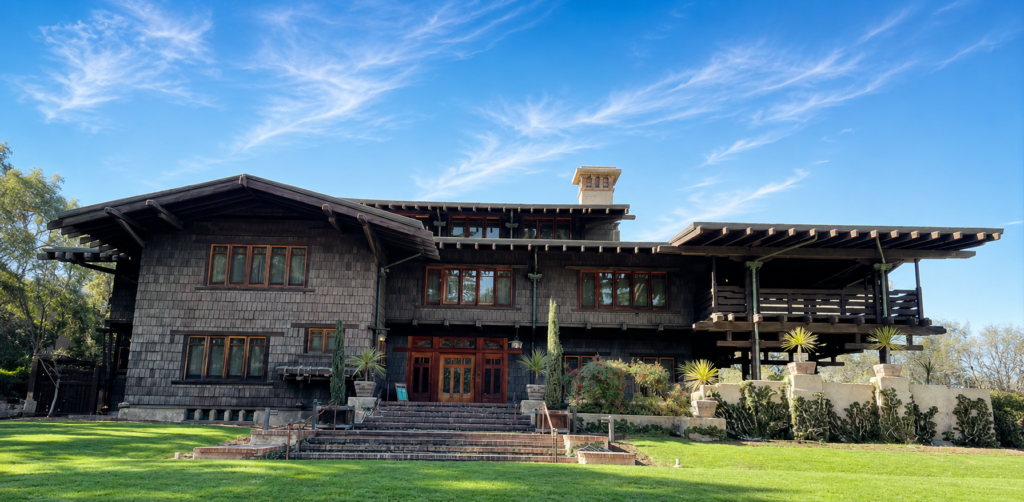
South Pasadena contains one of the densest concentrations of intact early-20th-century residential architecture in Los Angeles County. Craftsman bungalows are the signature style, with 18 of 114 closed SFR sales identified as Craftsman. Spanish Colonial Revival (10 sales), Traditional (8), Mid Century Modern (7), Contemporary (6), Cottage (3), and Colonial (4) round out the most common styles. The city’s multiple designated historic districts protect the character of these streets.
The typical South Pasadena home is 2,119 square feet on a 7,780 square foot lot (median values from 114 closed SFR). Lot sizes are generous compared to other NELA neighborhoods, with mature trees and established landscaping on most parcels. The era range spans 1910 to 1967 (within this dataset), with the heaviest concentration in the 1920s and 1930s.

Landmark Architecture
The Arroyo Seco corridor forms the western boundary and provides trail access, open space, and a naturalistic counterpoint to the city’s residential streets. The Arroyo Seco is a significant regional open space shared with Pasadena and the City of Los Angeles.
Meridian Iron Works (originally the Raymond Hotel laundry building) and other adaptive-reuse structures along the railroad corridor contribute to the mixed-use character of the Mission Street area.
South Pasadena is a regular filming location for productions that need a tree-lined American small-town setting within the Los Angeles metro area. The city’s residential streets and downtown corridor have appeared in numerous film and television productions.
From Felipe
Pasadena is one of my favorite places to ride a bike. There are some incredible properties on Arroyo Boulevard and they span a huge range of architectural styles from French chateau to Spanish to Craftsman. It is so peaceful. Tree-lined streets, absolutely gorgeous. If you get a chance, ride your bike down this street.
Parks & Outdoor Activities
South Pasadena has multiple neighborhood parks including Garfield Park, Library Park, Eddie Park, and War Memorial Park. The Arroyo Seco adjacent open space provides hiking and trail access along the western edge of the city. The city operates its own parks and recreation programs.

Best Restaurants and Places to Eat in South Pasadena
South Pasadena’s dining scene is concentrated along Mission Street, the city’s walkable downtown corridor. The restaurant mix leans independent and neighborhood-scale.
South Pasadena Restaurants & Dining
| Restaurant | Cuisine | Notes | Source |
|---|---|---|---|
| The Carving Board – 1001 Mission St | Sandwiches | Known for carved-meat sandwiches. Named among best sandwich spots in greater LA. | Eater LA; Yelp |
| Mike and Anne’s – 1040 Mission St | American Comfort | Mission Street anchor. Weekend brunch draws from across the SGV. | Eater LA; Discover LA |
| Shakers – 1006 Mission St | American/Brunch | Long-standing breakfast and lunch spot on Mission Street. | Yelp; local editorial |
| Mission Street corridor restaurants | Mixed | he Mission Street corridor between Meridian Ave and Mound Ave contains a concentration of independent restaurants, cafes, and bakeries within walking distance of the Metro station. | City of South Pasadena |
| Trader Joe’s & daily-needs retail | Grocery/Retail | Trader Joe’s and CVS are accessible within or immediately adjacent to city limits. Standard daily-needs retail is available locally. | Direct observation |

Shopping and Retail in Atwater Village
South Pasadena’s retail is concentrated along Mission Street, which functions as a traditional American main street at a walkable scale. Independent bookshops, boutiques, cafes, and service businesses line the corridor.
South Pasadena Shopping & Retail
| Destination | Category | Notes | Source |
|---|---|---|---|
| Mission Street Corridor | Mixed Retail/Dining | Walkable downtown core. Independent restaurants, cafes, bookshops, boutiques, professional services. Walk Score above 80. | City of South Pasadena; Walk Score |
| Fremont Centre Theatre | Community Theater | Community theater with regular programming. | City of South Pasadena |
| South Pasadena Farmers Market | Farmers Market | Weekly farmers market. Community anchor event. Verify current schedule at the City website. | City of South Pasadena |
| South Pasadena Public Library | Library | Part of the LA County Library system. Located on the Mission Street corridor. | LA County Library |
| Old Pasadena (adjacent) | Major Retail District | Pasadena’s primary retail and dining district is immediately north. Higher-end retail, national chains, and destination restaurants. | Discover LA; Visit Pasadena |

South Pasadena Real Estate Market Snapshot: Prices, Days on Market, and Sales Data
At-a-glance market summary for South Pasadena single-family residential sales over the past 365 days.
South Pasadena At-a-Glance Market Data
| SFR Sold | Median Price | Median $/SqFt | Median DOM | List-to-Sale | Sold Over Asking |
|---|---|---|---|---|---|
| 114 | $2,100,000 | $1,008 | 24 days | 103.7% | 63% |
This is the strongest seller’s market in the NELA cohort. The 103.7% list-to-sale ratio means the typical South Pasadena home sells nearly 4% above asking. The 63% over-asking rate means almost two out of three homes attract competitive bids. The 24-day median DOM is the second-fastest in NELA (behind Echo Park’s 12, which has only 16 sales). For sellers, the numbers mean your correctly priced home should receive multiple offers within three to four weeks. For buyers, this is a market where hesitation costs you the house.
Homes for Sale in South Pasadena: Current Active Listings
Beds
Baths
SqFt
Beds
Baths
SqFt

The information being provided by CSMAR is for the visitor's personal, non-commercial use and may not be used for any purpose other than to identify prospective properties a visitor may be interested in purchasing or leasing. Information relating to properties referenced on this web site may originate from the Internet Data Exchange (IDX) program of CSMAR. This web site may reference real estate listing(s) held by a brokerage firm other than the broker and/or agent who owns this web site. Any information originating from CSMAR, relating to a property, regardless of source, including but not limited to square footages and lot sizes, is deemed reliable but not guaranteed and should be personally verified through personal inspection by and/or with the appropriate professionals. Listing data originating from CSMAR is copyrighted by CSMAR and is protected by all applicable copyright laws. Any dissemination of this information is in violation of copyright laws and is strictly prohibited.
South Pasadena Market Data: Concessions, Price Distribution, and Condo Sales
Concessions and Active Inventory
South Pasadena Concessions & Active Inventory
| Metric | Value |
|---|---|
| Transactions with Seller Concessions | 27% (31 of 114) |
| Average Concession Amount (where applicable) | $46,297 |
| Median Concession Amount | $42,225 |
| Active SFR Listings (as of May 16, 2026) | 18 |
| Pending / Under Contract SFR | 9 |
Market Interpretation
27% of South Pasadena sellers offered concessions over the past year. That sounds moderate until you pair it with the 103.7% list-to-sale ratio: even among the 27% who conceded, most still sold above their asking price. The median concession was $42,225. In many of these transactions, the concession was a buyer-broker compensation credit or closing cost contribution that came out of a sale price that already exceeded the original list. Conceding in South Pasadena is not the same as conceding in a soft market.
For sellers: you are in the strongest position in the NELA cohort. The 103.7% list-to-sale ratio and 63% over-asking rate mean the typical South Pasadena home attracts competitive offers and sells above list price within 24 days. At 18 active listings and a 114-sale annual pace, the absorption rate is approximately 1.9 months. That is sharply undersupplied. If your home is in the $1.5M to $2.5M core (46% of all sales), you should expect multiple offers if you price within the market. The risk is getting greedy: overpricing even in a hot market pushes you past the 24-day median and into territory where buyers start to question why.
For buyers: this is the hardest NELA market to buy into. You are competing against well-qualified buyers, many with cash or cash-equivalent financing. 63% of homes sell above asking. Your pre-approval needs to be airtight, your offer needs to be clean, and your timeline flexibility is a competitive advantage. Escalation clauses, appraisal gap coverage, and above-asking offers are common strategies here.
Buyer Financing Breakdown
South Pasadena has the most complete financing data in the NELA 9 cohort: 104 of 114 transactions (91%) reported financing type. This gives us a reliable picture of how buyers are funding their purchases.
South Pasadena Buyer Financing Breakdown
| Financing Type | Transactions | Share (of reported) |
|---|---|---|
| Conventional | 34 | 33% |
| Cash (all-cash purchase) | 33 | 32% |
| Cash to New Loan | 28 | 27% |
| Cash to Loan / Other | 5 | 5% |
| VA / FHA / Seller Financing | 4 | 4% |
| Not Reported | 10 | — |
The financing mix tells a story about competition. Conventional loans and all-cash purchases are nearly tied at 33% and 32% respectively. But the 27% cash-to-new-loan share is the number that matters for sellers: these are buyers who close with cash (or a bridge loan) and refinance afterward. From the seller’s perspective, that is a cash-equivalent offer with the speed and certainty of cash. That means roughly 59% of all reported transactions closed with either cash or a cash-equivalent structure. If you are a seller, your buyer pool is substantially more qualified than the sticker price alone would suggest.
Price Distribution
South Pasadena Price Distribution
| Price Range | Sales | Share | Cumulative | Notes |
|---|---|---|---|---|
| Under $1M | 3 | 3% | 3% | Rare entry-level: smallest homes, estate sales |
| $1M – $1.5M | 19 | 17% | 19% | Entry-to-mid: older bungalows, smaller lots, needs work |
| $1.5M – $2M | 31 | 27% | 46% | CORE: updated Craftsman, good lots, walkable locations |
| $2M – $2.5M | 22 | 19% | 66% | CORE: larger updated homes, premium locations, views |
| $2.5M – $3M | 18 | 16% | 81% | Premium: significant homes, prime streets, larger lots |
| Over $3M | 21 | 18% | 100% | Luxury / estate tier. Highest closed: $6,900,000 |
The $1.5M to $2.5M range is the core of the South Pasadena market, accounting for 46% of all sales. The distribution is notably top-heavy: 34% of all sales closed above $2.5M, and 18% exceeded $3M. This is a market with a deep luxury tier, second only to Los Feliz in NELA. The under-$1.5M segment (19% of sales) is thin and getting thinner. If you are a seller with a home in the core range and the SPUSD attendance zone, you are in the sweet spot.
Condos and Townhouses
South Pasadena recorded 34 closed condo and townhouse transactions over the same 365-day period at a median sale price of $991,750. The median price per square foot was $763. Median days on market was 27, and the median list-to-sale ratio was 101.3%, with 56% selling above asking. The median monthly HOA fee was $514 (range: $150 to $763).
The condo market here is competitive and functions as the entry point to South Pasadena for buyers who cannot access the SFR market at $2.1M median. If you are a seller with a condo in South Pasadena, the condo market moves fast and attracts buyers specifically targeting the SPUSD school district at an accessible price point.
Schools Near South Pasadena: Ratings and Options for Families
IMPORTANT: South Pasadena is served by South Pasadena Unified School District (SPUSD), not LAUSD. SPUSD is a standalone district serving only the City of South Pasadena. School attendance boundaries are determined by SPUSD. Verify enrollment and boundary information at spusd.net. SPUSD is the single most frequently cited reason buyers choose South Pasadena over other NELA neighborhoods. The district’s reputation for academic quality, small class sizes, and community engagement is a primary demand driver that supports the price premium South Pasadena carries over surrounding areas.
South Pasadena Schools
| School | Grades | Type | GS | Niche | US News | Notes |
|---|---|---|---|---|---|---|
| South Pasadena High School | 9-12 | SPUSD | 9/10 | A+ | — | Consistently ranked among CA’s top public high schools. Strong AP, arts, athletics. |
| South Pasadena Middle School | 6-8 | SPUSD | 8/10 | A | — | Strong academic performance metrics. |
| Arroyo Vista Elementary | K-5 | SPUSD | — | — | — | One of three SPUSD elementary campuses. |
| Marengo Elementary | K-5 | SPUSD | — | — | — | SPUSD elementary campus. |
| Monterey Hills Elementary | K-5 | SPUSD | — | — | — | SPUSD elementary campus. |
Zoning, Permits, and Property Rules in South Pasadena
South Pasadena is an incorporated city with its own zoning code, planning department, and building department. Do not assume City of Los Angeles rules apply here. Permits, zoning, ADU regulations, and historic preservation rules are administered by the City of South Pasadena, not LADBS.
Historic Preservation
South Pasadena has multiple designated historic districts and a strong preservation culture. If you are selling a property in a designated historic district or a property with individual historic designation, the buyer’s ability to modify the exterior is constrained by the City’s review process. This is both a selling point (protected character supports values) and a constraint (renovation plans require review). Check your property’s
ADU Policy (City of South Pasadena)
California state ADU law (AB 68, AB 881, SB 13 and subsequent amendments) applies. South Pasadena has adopted ADU regulations consistent with state minimums. Most R-1 parcels may construct at least one ADU and one Junior ADU (JADU). ADU permitting is handled through the City of South Pasadena Building and Safety Division, not LADBS. State law continues to evolve; advise clients to consult directly with the City for current regulations.
Insurance & Natural Hazard Context
South Pasadena’s urban core character means most parcels are in lower fire hazard classifications than hillside NELA neighborhoods like Mt. Washington or Los Feliz. However, parcels adjacent to the Arroyo Seco and the hillside edges of the city should be individually evaluated for fire hazard severity zone status. Los Angeles County is in a high-seismic zone; standard homeowner’s insurance does not cover earthquake damage. A separate earthquake policy is recommended.
California’s insurance market is currently constrained statewide. Verify carrier availability before opening escrow regardless of fire zone status. Most of South Pasadena is not in a FEMA Special Flood Hazard Area, but verify per parcel at the FEMA Flood Map Service Center.
Property Tax
Properties in South Pasadena are subject to Los Angeles County property taxes. Proposition 13 limits the base tax rate to 1% of assessed value. Additional assessments (SPUSD bonds, city assessments, county levies) bring the effective total rate to approximately 1.10% to 1.25% depending on parcel. A supplemental tax bill is issued at close of escrow for the difference between prior and new assessed value. Verify Mello-Roos / CFD status per parcel.
Standard California Disclosures
All California residential transactions require: Transfer Disclosure Statement (TDS); Natural Hazard Disclosure (NHD) report; lead paint disclosure (pre-1978 construction, and the majority of South Pasadena’s housing stock predates 1960); Seller Property Questionnaire (SPQ); historic designation notice if applicable; Mello-Roos and special assessment search.
Selling Your Home in South Pasadena: Pricing Strategy and What to Expect
South Pasadena sellers are in the strongest position of any NELA submarket. The 103.7% list-to-sale ratio is the highest in the NELA 9 cohort. The 63% over-asking rate is the highest. The 24-day median DOM is the second-fastest. And the financing data shows that 59% of reported transactions closed with cash or cash-equivalent structures. Your buyer pool is deep and well-qualified.
Pricing Strategy
The 103.7% list-to-sale ratio means the typical South Pasadena home sells nearly 4% above asking. At a $2.1M median, that is approximately $78,000 above list. But this does not mean you can overprice and expect the market to carry you. The homes that achieve 103%+ are the ones priced accurately for condition, location, and school zone, creating competition among buyers. The homes that sit beyond 24 days were typically priced above the market or had condition issues.
The core of the market is $1.5M to $2.5M (46% of sales). If your home falls in this range, you are in the most competitive segment. Above $2.5M (34% of sales), the market is still strong but the buyer pool narrows and the competition intensity drops. If you are pricing above $3M, expect a more targeted buyer search and potentially longer time on market.
The Cash-Buyer Dynamic
At South Pasadena price points, cash and cash-equivalent buyers make up the majority of the market (59% of reported transactions). If you get an off-market offer from a cash buyer, do the math carefully. On a $2.1M home, the difference between a 70-cent cash offer ($1,470,000) and an open-market sale at 103.7% of asking ($2,177,700) is $707,700. The South Pasadena open market is competitive enough that listing your home will almost certainly generate multiple offers. The off-market discount is the price you pay for skipping that process.
Pre-List Preparation
Before listing, check your permit history with the City of South Pasadena Building and Safety Division (not LADBS). Verify your property’s historic district status with the Planning Department. Get a pre-list inspection. In a market this fast, buyers who discover issues during due diligence will use them to renegotiate or walk, and in the time it takes to resolve the issue, you have lost your initial momentum.
If your property is in a designated historic district, understand what the buyer can and cannot modify before you list. This is a selling point for the right buyer, but it needs to be disclosed and positioned correctly.
If you’d like a South Pasadena valuation for your specific block, reach out to Felipe.
Buying a Home in Atwater Village: Financing, Concessions, and Competition
If you are buying in South Pasadena, you are entering the most competitive market in NELA. The 103.7% list-to-sale ratio, the 63% over-asking rate, and the 24-day median DOM mean that well-priced homes attract multiple offers quickly. Understanding what drives this market and how to compete in it is the difference between winning and watching.
What You Are Paying For
The South Pasadena price premium over comparable NELA neighborhoods is largely a school-district premium. SPUSD’s reputation for academic excellence is the primary demand driver. You are also paying for an incorporated-city municipal identity (own police, own planning, own school district), walkable downtown character, constrained supply (3.4 square miles with strong preservation), and mature tree canopy and housing stock. These are structural features of the city that do not change with market cycles.
Financing Strategy
The financing data tells you what you are competing against: 32% all-cash, 27% cash-to-new-loan, 33% conventional. If you are making a conventional offer, you are competing against buyers who can close with cash or bridge-loan structures. Your pre-approval needs to be from a reputable lender, ideally one the listing agent recognizes. An appraisal gap waiver or coverage clause is often necessary when offering above list price. If you are financing with FHA or VA (combined 2% of sales), you are at a structural disadvantage in multiple-offer situations.
Concession Guidance
27% of sellers offered concessions, but in a market where 63% of homes sell above asking, asking for concessions on a competitive listing will likely cost you the deal. Concession requests are more viable on properties that have been listed for more than 24 days (the median DOM) or properties with condition issues. On a well-priced listing in the core range, your offer should be clean and your concession request should be zero.
The Condo Alternative
If $2.1M is above your budget, the South Pasadena condo market offers an entry point at $991,750 median. The condo market is also competitive (101.3% list-to-sale, 56% over asking, 27-day DOM), but the price point gives you access to the SPUSD district and the South Pasadena municipal identity at roughly half the SFR entry price. Median HOA is $514 per month.
If you’re shopping for a South Pasadena home, reach out to Felipe.
How South Pasadena Compares to Other Northeast Los Angeles Neighborhoods
All data below is SFR only, 365 days ending May 16, 2026, sourced from CRMLS. Same cutoff date across all 9 neighborhoods. Note: South Pasadena is an incorporated city, not an LA City neighborhood. It is included in the NELA cohort for geographic and market comparison purposes.
NELA Comparison – South Pasadena Highlighted
| Neighborhood | SFR Sold | Median Price | $/SqFt | Med. DOM | L/S Ratio | Over Ask | Pure Cash | Concessions |
|---|---|---|---|---|---|---|---|---|
| Los Feliz | 171 | $2,430,000 | $978 | 40d | 96.8% | 29.8% | 41.1% | 14.5% |
| South Pasadena | 114 | $2,100,000 | $1008 | 24d | 103.7% | 63.2% | 28.5% | 28.3% |
| Atwater Village | 91 | $1,350,000 | $1017 | 35d | 100% | 49.5% | 31.4% | 36.2% |
| Eagle Rock | 157 | $1,350,000 | $900 | 28d | 102.5% | 56.1% | 32.3% | 31.7% |
| Mt. Washington | 104 | $1,342,500 | $828 | 40d | 100% | 46.2% | 32.4% | 24.5% |
| Silverlake | 19 | $1,225,000 | $870 | 46d | 98% | 42.1% | 32.1% | 82.1% |
| Glassell Park | 97 | $1,222,430 | $767 | 41d | 100.0% | 49.5% | 21.6% | 24.5% |
| Echo Park | 16 | $1,219,500 | $824 | 17d | 101.9% | 62.5% | 25% | 75% |
| Highland Park | 220 | $1,220,000 | $896 | 33d | 101.4% | 54.3% | 28.3% | 33.7% |
| Cypress park | 13 | $973,500 | $841 | 45d | 98.8% | 38.5% | 12.5% | 40% |
Frequently Asked Questions About South Pasadena Real Estate
What is the median home price in South Pasadena?
The median SFR sale price in South Pasadena is $2,100,000 (CRMLS Area 658, 365 days ending May 16, 2026, 114 closed transactions). The median price per square foot is $1,008. The condo/townhouse median is $991,750 (34 transactions).
How competitive is the South Pasadena market?
South Pasadena is the most competitive market in the NELA cohort. The median list-to-sale ratio is 103.7% (meaning the typical home sells nearly 4% above asking), 63% of homes sell above asking price, and the median days on market is 24. Well-priced homes in the core $1.5M to $2.5M range routinely attract multiple offers.
Why is South Pasadena more expensive than Highland Park or Eagle Rock?
Three structural factors: (1) SPUSD, South Pasadena’s independent school district, consistently ranks among the top public school districts in the region and is the primary demand driver. (2) South Pasadena is an incorporated city with its own municipal services, not a neighborhood within LA. (3) The 3.4-square-mile footprint with strong preservation limits new supply. These are not cyclical factors. They persist across market conditions.
What school district serves South Pasadena?
South Pasadena Unified School District (SPUSD), a standalone district serving only the City of South Pasadena. This is not LAUSD. SPUSD operates three elementary schools (Arroyo Vista, Marengo, Monterey Hills), one middle school, and South Pasadena High School. Verify enrollment boundaries at spusd.net.
Is South Pasadena in a fire zone?
Most of South Pasadena’s urban core is in a lower fire hazard classification than hillside NELA neighborhoods. However, parcels adjacent to the Arroyo Seco and the hillside edges of the city should be individually evaluated for FHSZ status. Verify per parcel via the NHD report. Earthquake risk is significant countywide; a separate earthquake insurance policy is recommended.
Can I build an ADU in South Pasadena?
Yes. California state ADU law applies, and South Pasadena has adopted regulations consistent with state minimums. Most R-1 parcels may construct at least one ADU and one JADU. Permitting is through the City of South Pasadena Building and Safety Division, not LADBS. State law continues to evolve; consult the City directly for current regulations.
Fair Housing Commitment
FAIR HOUSING COMPLIANCE STATEMENT: All neighborhood characterizations in this document describe physical, geographic, architectural, market, and amenity attributes only. No statement in this document references, implies, or is intended to convey information about the racial, ethnic, religious, national origin, sex, disability, familial status, or other protected-class composition of any area, neighborhood, school, or community. This document is prepared in compliance with the federal Fair Housing Act (42 U.S.C. §3604), California’s Rumford Fair Housing Act (Gov. Code §12955 et seq.), and the National Association of Realtors Code of Ethics. School data, ratings, and demographic information are provided as objective published third-party data, not as steering guidance. Felipe Crook – eXp Realty serves all clients equally and without regard to any protected characteristic.
© 2026 Felipe Crook – eXp Realty | CA DRE #02047440 | Broker: eXp of Greater Los Angeles, Inc.
All data cited from third-party sources. Verify all information independently before making real estate decisions.
MLS Data: CRMLS, Area 658, 365 days ending May 16, 2026. Lifestyle data: cited per entry.